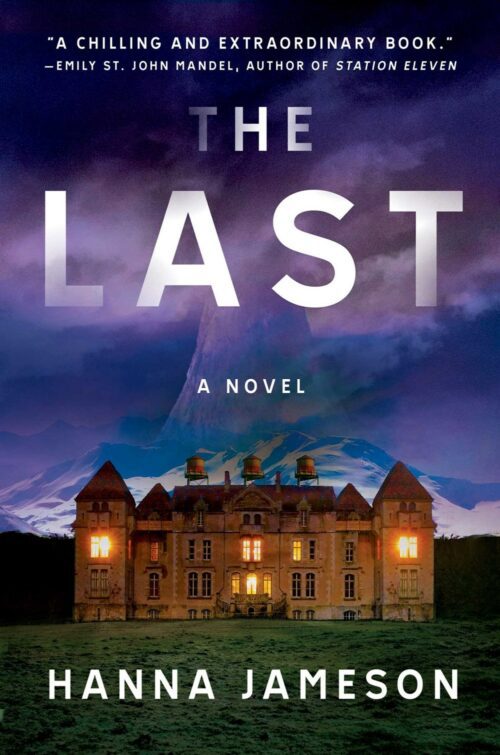
The Last
Genres Mystery, Post Apocalyptic, Contemporary
5.5/10
Jon is in a hotel in Switzerland just as the nuclear apocalypse is started. Now stranded with a group of strangers, unsure about the fate of the rest of the world, scared to leave yet needing to find food, filled with regret about his last family interaction, and now facing the reality that a killer might be among them, Jon does the only thing he can to keep himself sane: he writes a journal of the day to day in this post apocalypse.
Highlights
- Murder mystery and post apocalyptic survival are not genres that mesh well
- The tone is inconsistent
- A lack of depth in the exploration of themes
- Entertaining enough in a pinch
A murder mystery taking place after the nuclear apocalypse was not a pitch I was fully onboard with to begin with as they didn’t sound like two elements that would blend well. In my mind, the world ending, facing the early days of nuclear fallout and fighting for one’s survival is a significant enough event that it would warrant full focus. However, in a murder mystery, I expect the focus to be on clever clue placement and paying attention to every detail to try to identify the culprit. Unfortunately, I was not proven wrong and The Last did not feel like a post apocalyptic murder mystery and instead felt like two separate stories told in turns.
The story begins with the focus on the end of the world before switching its focus to the murder investigation led by the protagonist before switching back again to the end of the world for the majority of the story and finally quickly jumping back to closing out the murder investigation just before finishing the book. There’s two stories being told here and they don’t mix…at all. One could take out the murder mystery bits and still have a full post-apocalyptic novel where nothing was missing and arguably vice-versa although the murder mystery story itself was not that strong to begin with.
The tone of the novel was also victim of a lot of switching about, sometimes hopeful, sometimes grim, sometimes depressing. However, even in the darkest moments there is a feeling of levity due to serious themes not being fully explored.
Spoiler
One chapter focuses on the main group deciding to condemn a man to death without trial due to their lack of food and medicine resources thus justifying their inability to keep alive a prisoner not contributing to the group’s survival and putting the wider group at risk. However, later in the book, another group is mentioned imprisoning their criminals despite facing the same resource availability problem and yet the reasoning for this group is never explored
Altogether the book gives the impression of an author writing whatever they wanted to write whenever they wanted to write it without having a proper overarching plan. This would account for the genre and tonal shifts, as well as the mistakes that really should have been caught by the publisher like the same sentence being repeated twice in a row and even character names being misspelled.
It’s not all bad, there is entertainment to be found here and the way this book approaches nuclear apocalypse (by it being focused on the early days of survival rather than years later as is often the case) feels novel enough to be fun on its own but it’s very far from being a must read or a masterpiece.