
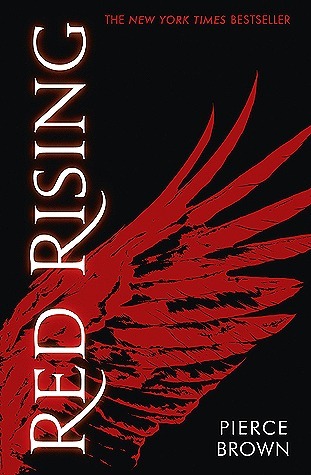
Red Rising (Red Rising Saga #1)
by Pierce Brown
Genres SciFi, Mythology, Adventure
8.25/10
Darrow is a Red, a faction working to make Mars habitable for future generations. The work is dangerous, difficult and will take years. However, Darrow soon finds out that Mars has been habitable for years and that the higher class, the Golds, have kept the Reds in the dark about the truth to keep them as slaves. Looking for revenge and/or justice for his people Darrow will be infiltrating the Gold society even if he has to become one of them to do so.
Highlights
- A modern take on greco-roman mythology
- Original execution but the shadow of Hunger Games is heavy
- Endearing characters
- Ending feels a bit rushed
I’d been craving a good scifi read for a while, having previously managed to chain Project Hail Mary, Foundations and Murderbot, it’s been difficult to find something that showed the potential to match those three, and Red Rising’s blurb didn’t impress me. A classist society exploiting the lower class, a protagonist rising up to free their people, and a grand competition to become someone in this society all just made me think “Hunger Games but on Mars”. I never read Hunger Games, my experience of the story being limited to the movies but Red Rising very pleasantly surprised me by rising above and beyond both my expectations and Hunger Games’ shadow.
Red Rising tells the story of Darrow, a 16 year old working in the mines of Mars to make the planet habitable for future generations. He is part of the Red faction which is supervised by a smaller group of Golds, the upper class of the solar system originating from Earth’s moon. Darrow’s work is dangerous and his life is rough but he’s happily married to his wife Eo and he’s well on his way to have the best mining quota, securing himself a win against the other mining groups in a competition regularly organised by the golds to maintain productivity. It all obviously comes crumbling down as Darrow learns that everything he knows has been a lie and that the Golds have been living in decadence on Mars’ surface for years and that Red’s are kept as little more than slaves. From this point on Darrow is recruited by a rebel group tasking him with infiltrating the Gold institution which involves some rather painful surgeries, long studies and exams and a grand competition where victory means prosperity and a career.
If you’re like me, the first thing you’re thinking at this point is “isn’t that a lot for a 16 year old?”. It is and to be honest I’m not sure why Darrow had to be 16, the story seemed like it would have been unaffected with him being a young adult rather than a teenager and him having a wife, his monumental tasks and his general attitude and behaviour would be far less at odds with his age. It’s a quickly forgotten flaw but one that kept bugging me early on.
Nevertheless the set up here is good if a bit plain. The book opens very strongly with a sentence that is repeated a few times explaining that when someone is hanged on Mars, the family members have to pull down on the condemned’s legs to break their neck as Mars’ gravity is too low to cause death otherwise. This sets the scene for a grim and dark story which it is up until the “Hunger Games” chapters begin. As Darrow joins up the academy to take part in the grand Gold competition, there is a tonal and almost thematic shift as the larger scope of the story remains broadly forgotten up to the end. Darrow and the other Golds are split up into tribes, each tribe under the guard of a proctor adorning the name of a Roman god. The tribes are each awarded a castle and a standard and need to fight each other on a battlefield whilst the proctors oversee and assist as they can from their observation station named Olympus. Last tribe standing wins. Overall we are facing a scifi greek mythology story in a large scale hybrid of capture the flag and king of the hill.
These “game” chapters which make up well over 70% of the book are great fun. They feel like the narration of someone’s Age of Mythology game, each tribe has a specialty whether it be warfare, horsemanship or agriculture based on the boons offered by their proctors/gods; tribe chiefs are treated as demi gods, and the way characters are handled, it almost feels like everyone is a specific “unit” with their own stats and abilities. Again, this is amazing fun; where Hunger Games had a fairly limited scope of survival and murder, Red Rising adds an extra layer of tactics and strategy even if the core concept remains similar.
The focus is not purely on the game however, and characters and relationships undergo significant development along the way, greatly humanising the Golds who until now were mostly seen as “the enemy” with a superiority complex. We actually spend so much time with these Golds that in the end they are arguably more likeable and much better defined than the people Darrow has known his entire life, including his wife and family. This is also rendered worse by the fact that despite the beginning of the story emphasising the importance of Darrow’s mission to save the Reds, the overarching is all but forgotten whilst the game is ongoing.
Whilst somewhat forgiven as the story was clearly set up to become a saga, Red Rising suffers from a pretty rushed ending. Where the first 25 to 30% of the story lead up to the grand game, we are only allowed one and a half chapters dealing with what happens after the game(where “after” means roughly the first couple of hours after it ended), almost as if the author had decided that after finishing the game they weren’t particularly interested with going back to the grand story of Darrow saving the Reds from their situation.
The objective critic in me would like to hold this up against the book a lot more but, the personal reviewer than I am has to admit: I’ve had an incredible amount of fun reading Red Rising and I’m possibly even glad that the author checked out almost immediately after finishing the game, because whilst I will be paying the second entry a visit, I do not think it will be able to capture me again the way this mythological strategy game has.