
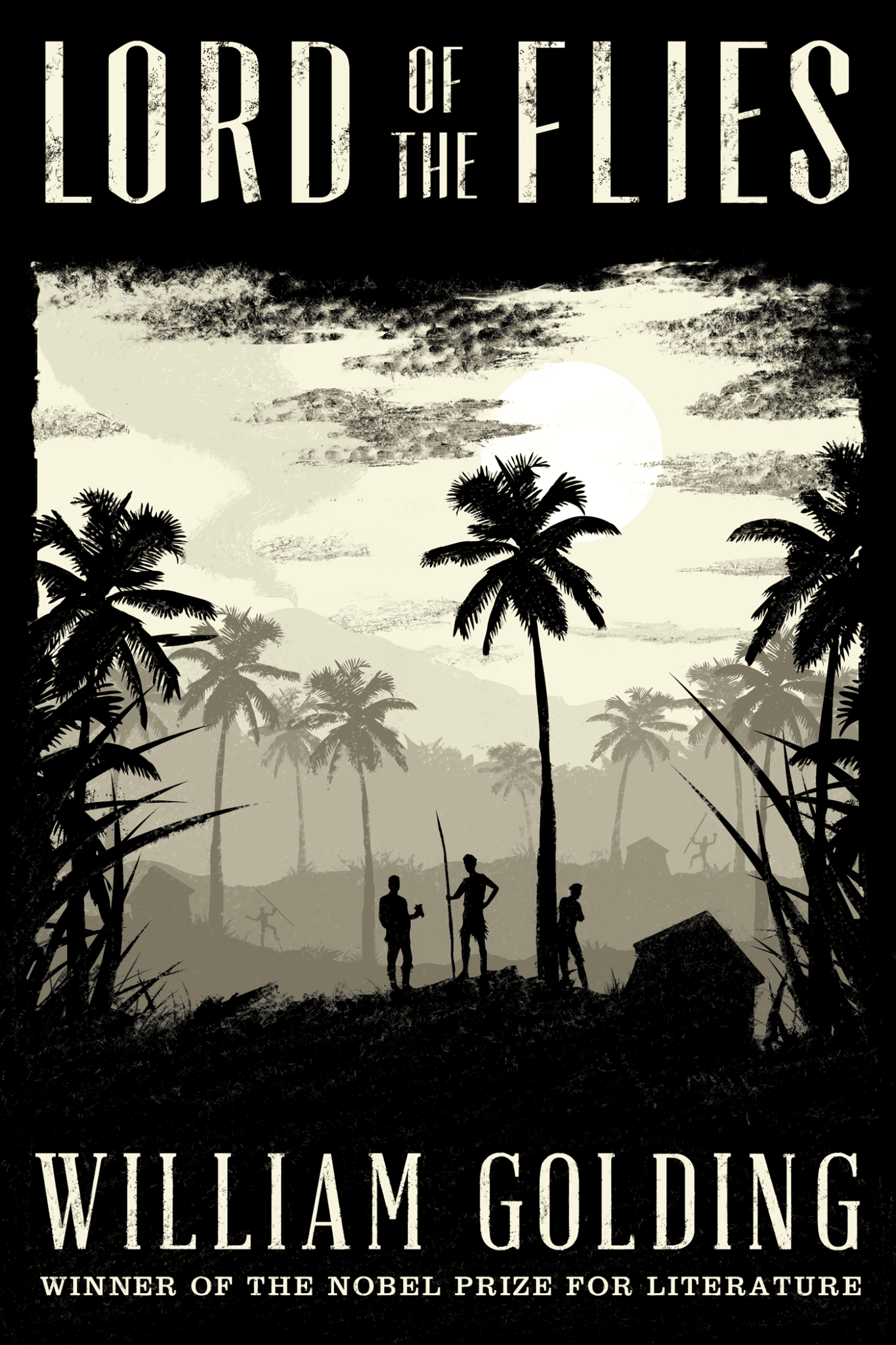
Lord of the Flies
Genres Classic, Adventure, Psychology
3/10
A group of British boys find themselves stranded on an island following a plane crash. Their first priorities are to find sources of food and a way to attract the attention of potential boats passing by to be rescued. However, it doesn’t take long for the children’s fantasies and their internal politics to create a divide between them.
Highlights
- It reads like the author had a message to communicate and not like they had a story to tell
- Despite it being a well-known classic, the story direction surprised me
- Disagreeing with the message makes the book very frustrating to read
- The characters being children might be doing the story a disservice
After indulging in some “fast food reading” with Boyfriend Material, I was feeling ready to tackle another English classic I had missed out on whilst going to French school with Lord of the Flies. This review isn’t easy for me given the score I gave but it’s important to note that what brings this book down for me mostly is the answer to the “Did I have a good time reading this?” question and not a reflection of whether I think it deserves it’s status as a classic.
The story begins with a group of boys between roughly 6 and 12 years old (referred to in the book as “biguns” and “littluns”) who need to survive and find a way to be rescued from an island their plane crashed on. Now, the direction I thought the story was going to take based on what I had heard about this book was that for the sake of survival, the system they create ends up being fascist and dictatorial. In other words I was expecting Animal Farm but instead of the communist revolution, it would be the NSDAP. This is not what happens, instead the children turn tribal and primal to such an extent that I would consider it unbelievable.
Therein lies my biggest issue with Lord of the Flies: I don’t buy it. The first half had me intrigued as again, like Animal Farm, this reads like a book where the author wanted to send a message across even if it somewhat hurts the actual storytelling. The children rarely speak to each other like children, instead they often make speeches using words too complex for their age and feel like the author handing his characters a script to read off from. They also seemingly never miss their parents nor any of the luxuries of modern life aside from readily available food…and haircuts.
However, starvation is never a threat and planning for a rescue is handled quite nonchalantly as this isn’t meant to be a survival story. Both the quest for food and rescue are purely tools to create a divide between two main groups: the ones who prioritise getting rescued and will settle for the widely available fruits and the ones who only care about hunting…and spilling pigs’ blood (bit odd if you ask me). The island itself is also just a tool for the author as it is simultaneously immensely large or ridiculously small depending on what the author needs to happen.
Spoiler
The children accidentally burn down half of the island early on yet somehow this doesn’t affect their fruit gathering nor hunting in the slightest. Yet, in the last few chapters rocks the size of a car tumble down from the top of the mountain and reach the beach the children are standing on so quickly that one of them is even killed before having the time to react.
Finally, there is the issue that none of the themes nor major events hit home for me. This is difficult to cover without going into more spoilers but in short: The chapter giving the book its name left me confused and felt like it was coming out of nowhere more than anything else, I found the events leading to the children reaching their most primal state ridiculous, the ending felt rushed and nonsensical, and several set ups have either no pay off or are actively being backtracked on for seemingly no reason.
Spoiler
- Simon, one of the kids, isolates himself in the forest and finds a pig’s skull surrounded by flies. He proceeds to have confused thoughts regarding this Lord of the Flies. I most likely completely missed the point here but this is a prime example of the book being written to send a message instead of trying to tell a good story as at face value I don’t believe this chapter makes any sense and is specifically meant to be studied in the way one would would in English class.
- The children get scared by Simon running out of the forest and stab him to death whilst singing their “spill its blood” chant that they do when hunting pigs and despite there being over a dozen of them nobody notices that they are stabbing one of their own.
- The book ends with a Deus Ex Machina of adults suddenly landing on the island and the book just ends without consequences.
- There’s a few different failed set ups in my opinion, but the most outrageous one would be Piggy being named Piggy. The story revolves around the tribals’ thirst for pig blood and yet the character named Piggy dies from a random rock falling down from a mountain.
It’s safe to say I didn’t get Lord of the Flies and this is probably an important aspect of enjoying it, however of the classics I have read so far it is the first one that truly fails at creating any sort of face value interesting story. It’s worth noting that whilst they didn’t read it with me, my partner did read the book for their English class back in the day and they have a much more positive opinion of it. I liked the blurb and I liked the idea of the story I had in my head of children, pushed by the need to survive, accidentally creating a fascist society. Instead I read what felt like a severely contrived story pushed by the author wanting to say something, I’m just not sure what that something is. If it was that children can return to a completely primal state in a matter of weeks, I’m just don’t buy it.