
Shogun
Season 01
Genres Historical, Japan, Drama
7/10
Shogun follows John Blackthorn a risk-taking English sailor who ends up shipwrecked in Japan, a land whose unfamiliar culture will ultimately redefine him. Lord Toranaga, a shrewd, powerful daimyo, at odds with his own dangerous political rivals; and Lady Mariko, a woman with invaluable skills but dishonorable family ties, who must prove her value and allegiance.
Highlights
- A really interesting historical perspective of Japan and its interactions with Catholicism
- Character development is really good…
- …but character motivation is obtuse
- Japan’s suicide culture is very present and for the most part does the story told a disservice
I recently tried playing Ghost of Tsushima after its release to PC and bounced off it fairly quickly. There were some purely game related issues I ran into such as the open world being essentially unnecessary (although it was admittedly beautiful looking) and the somewhat broken promise of it being “more like Assassin’s Creed than modern day Assassin’s Creed itself is”, but I also an issue with its story…and its setting.
Japanese culture as a whole for the most part clashes with me in one way or another. Sometimes it’s for very obvious reasons such as anime or manga too often and too easily falling into their sexist and paedophilic tendencies which I have a very hard time ignoring (see my Overlord review). Other times it’s a frustrating disinterest in the country’s History, despite enjoying History as a subject and happily learning more about it, I have never managed to find interest in Japan’s History although the reason behind this still eludes me. In any case, after having dropped the game and looked online for some opinions, I found that the game’s sales had been boosted by the recent release of a new critically acclaimed historical drama set in Japan: Shogun.
Pushed by curiosity I decided to check the series out and to its honour, I did enjoy watching it and will keep more positives than negatives from it, but it also strongly clashed with me in some aspects which unfortunately once more go back to me having an issue with Japanese culture, although this time the issue was how jarring the Japanese societal norms were to me.
Whilst the first episode doesn’t immediately start with this, it takes less than half an hour for a character to decide to commit sepuku and to kill his infant son. The character’s offence? He stood up after his lord having been insulted; having realised the apparent dishonour he did his lord by standing up, the character proceeds to ask for permission to kill himself, kill his child and make of his wife a widow which is all immediately accepted. Honour has always been a poor excuse to do distasteful things or mentally wrestle someone into doing stupid things, e.g. killing someone if they have slighted you before is honourable or going to fight in a losing war is honourable. However, dishonour follows a much more abstract and loose definition, assassinating someone in the woods and lie about it being a bandit attack is fair game as long as nobody finds out the truth (a surprisingly common trope in this series). This fundamental divide between most of the show’s characters’ values and mine is the source of most of my problems with it.
Thankfully, the protagonist is a very English Englishman, going by the terribly generic name of John who finds the Japanese attitude towards death, suicide and honour equally off-putting…at least for a while. John is the first Englishman who managed to find Japan, a land which was previously kept secret by the Portuguese who were on a mission to both line their pockets with the riches of Japan and to extend their catholic empire by converting as many Japanese people to their cause as they can. The first half of the show is mostly focused on John stumbling his way to survival, he finds few friends on the Japanese side, being met with an impossible language barrier and racism but he cannot hope for the catholic Portuguese to come to his help as an English protestant.
As John slowly finds allies on the Japanese side however, taking advantage of the divide between Toranaga and some of the other Japanese leaders and befriending Toranaga’s translator Mariko, the story starts focusing more on the political intrigue of the country. As the title might give away, the story revolves around who will carry the title of shogun. The previous shogun having died, a power vacuum formed and the peace is maintained through a shaky council made up of several of Japan’s greatest leaders. Toranaga leaving this council however and some of the leaders having converted to Catholicism puts this fragile peace in jeopardy. This setting surprisingly interested me, I think the Game of Thrones like approach of putting more focus on the political intrigue and character dialogues helped with getting me invested and there are several memorable characters here, all for the right reasons.
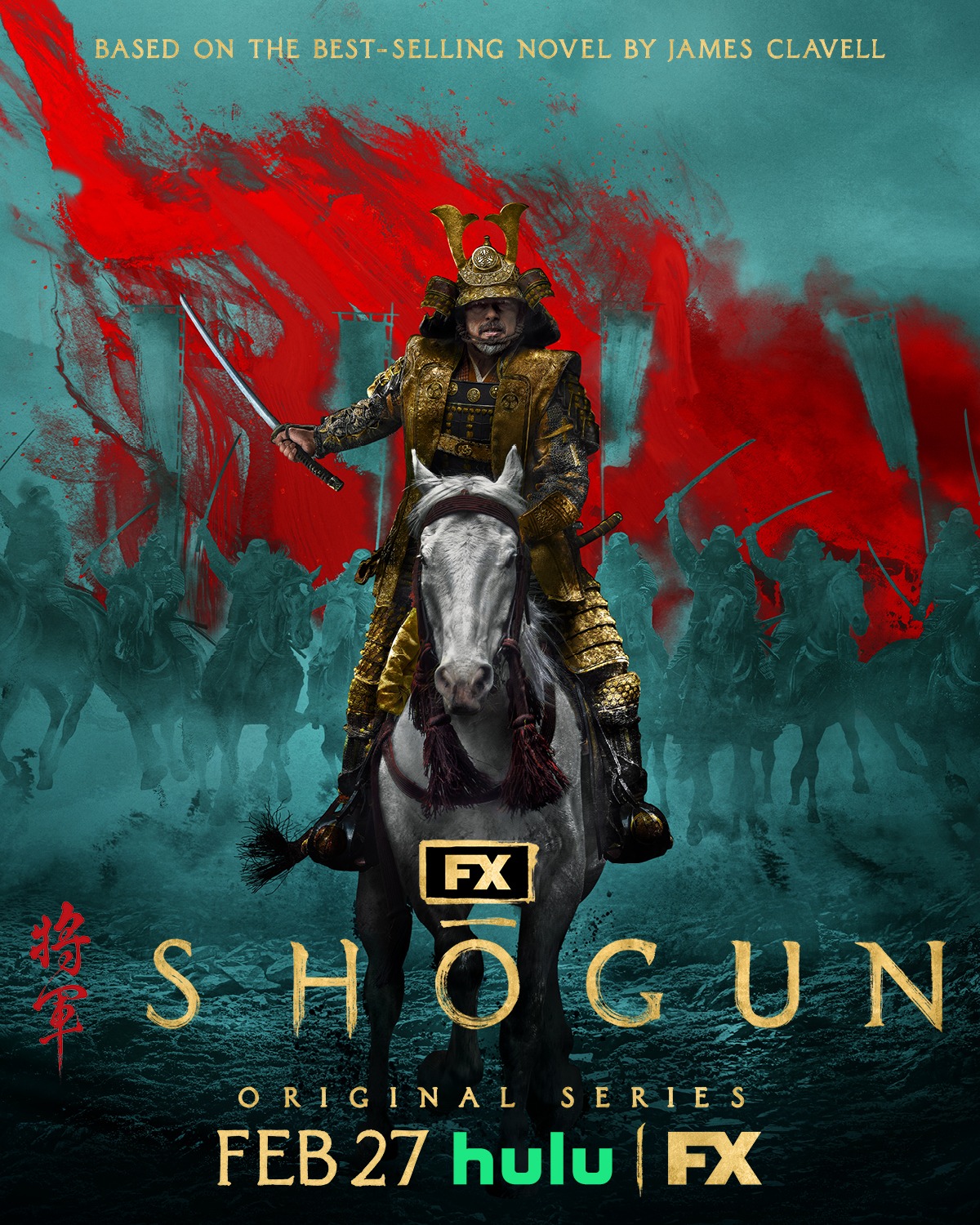
Unfortunately, character motivations are often obtuse and to make things worse in my eyes, the obtuseness often comes from the characters rigidly sticking to Japanese societal standards which are close to inane when these standards require several characters to kill themselves all for another character’s gamble to potentially work out or even more ridiculously for taking down a rotting pheasant (yes someone really does kill themselves because they took down a dead animal hanging from a window). Nevertheless, motivations and cultural issues aside, the resolution of the political intrigue is mostly satisfying and the character development that derives from it is quite good…if it weren’t for one thing. In true anime fashion, the show ends in an incredibly weak way, the entire political intrigue is in a way a set up for a larger conflict, the war that is threatened and banged on about for most of the runtime, but instead of teasing this larger conflict for an upcoming season, it is told to us. The characters plans are laid bare, the outcome of the war is set as is the future of all characters and there is essentially no reason for a next season…unless the plan goes wrong which in a way sets season 2 up to either be a predictable snoozefest or kind of spoils that the plan is going to fail. Most disappointingly of all is that the title art seen above simply isn’t in the show.
So where does this leave me with Shogun? I didn’t dislike it and I think it is worth the watch, I have a strong negative bias against Japan’s culture and this will inevitably skew my opinion to the negative. I will stand by that suicide for standing up is dumb as is suicide for any “honour” related reason and I think the plot of this show relying on certain characters committing suicide for those reasons is frustrating at best when it isn’t infuriating due to the clear double standards of what causes a suicide worthy offence. However, the characters are interesting, the relationship between Catholicism and Japanese culture is shown through different lenses and the shogun plot itself remained interesting and as such if there is one thing this show achieved it is to get me at least somewhat interested in Japan’s History and that still deserves some credit, even though I don’t think I have much interest in season 2.
Also a character dies because he slipped on a rock and the entire plot hinges on this having happened so make of that what you will.