
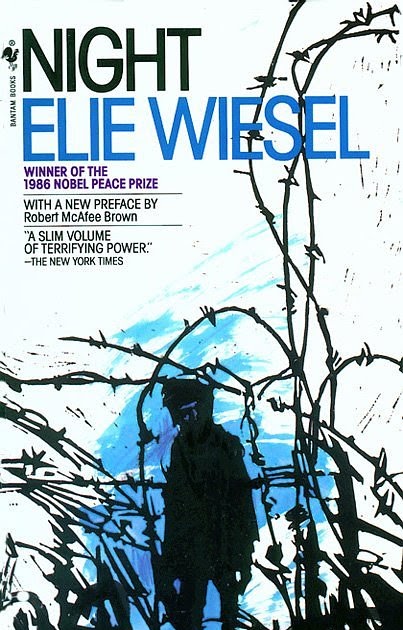
Night (The Night Trilogy #1)
by Elie Wiesel
Genres Classics, Historical, War
10/10
A first person record of Elie Wiesel’s life through World War II, from the ghettos to the death marches passing by two concentration and extermination camps.
Highlights
- It’s a morale obligation to read this one.
There is little I can say about Night, it’s a classic, a Nobel peace prize winner, and one of those books that can often be described as “required reading”. It’s a short read and despite being in a trilogy, I do not see what else the other books could possibly add as it follows from beginning to end the experience of the author from his life in the ghetto under Nazi control to his rescue by the American army going through his entire experience of the concentration and extermination camps of Auschwitz-Birkenau and Buchenwald.
It’s a profoundly dark and depressing tale as one would expect but the first person perspective and introspection also gave me a new perspective. When they are taught at school, the horrors of WW2 often focus on the most extreme aspects of the Holocaust, everyone has heard of the camps, everyone knows of the gas chambers, the ovens, the bones turned into soap, the medical experiments but that isn’t what Night focuses on because from the point of view of the prisoners in those camps, this was not what they were facing every day. Instead of the horrors leading to death, Elie Wiesel tells the story of his survival through the camps and maybe more gruesome even than the physical death of over 6 million Jews, the death of humanity not only in the Nazis but in the prisoners themselves, the death of God, the death of the spirit.
Elie’s struggles with his faith are one of the core narrative pieces and the dialogue around how does one reunite the belief in a just God with the suffering inflicted on the entire Jewish population by the Nazis. Another core narrative element is his relationship with his dad. Elie clings to him not only because he’s only a 16 year old boy who is forced to act much older by the circumstances but also because it is the only thing that he has left from his old life, his mother and sister and all his physical possessions having been taken from him on arrival. Through this relationship we get a view of the internal struggle between Elie who wants to care for his father and wants to live and the more insidious survival at all cost side that lives beneath. Elie catches himself wishing for his father to disappear or being tempted to take advantage of his father’s condition to support his own survival and every time he loses a bit more faith in himself as a human being and it is heart wrenching. This erasure of the self in exchange for a blanker survivor slate is seen in all prisoners as they lose their humanity as well simply focusing on surviving regardless of what it might cost other and in doing so end up behaving as disgustingly as the Nazis if it might give them a chance at making it through the camps.
I don’t want to say more than this and taking a step back, from an authorial point of view I’m unsatisfied with this review as it mostly consists of waffling but I must also recognise that this is not a subject I’m qualified to talk about. It’s an important book, one that everyone should read because it is a deeply educational piece on the horrors of World War II and of the Holocaust. I dare say, it is a moral obligation to read this one. If someone were to refuse to read this one because “it makes them uncomfortable” or because “History isn’t their thing” or because “they already know enough” or whatever other reason they make come up with, it says a lot more about them than anything else they could say about the subject.