
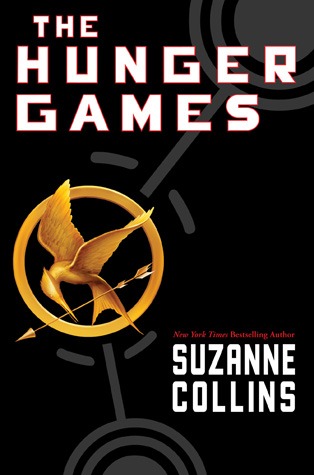
The Hunger Games Series (Books 1-3)
by Suzanne Collins
Genres Dystopia, Young Adult, Science Fiction
8/10
In the dystopian nation of Panem, the tyrannical Capitol punishes the outlying districts with the brutal Hunger Games—a televised fight to the death where only one tribute can survive. When Katniss Everdeen steps forward to save her sister from this fate, she unwittingly becomes the face of resistance. As the Games unfold, the spark of rebellion ignites, setting Katniss on a dangerous path that will challenge the very foundations of Panem’s oppressive rule. But in a battle where survival means more than just staying alive, Katniss must decide what she’s truly fighting for.
Highlights
- It’s a much darker story than what both the YA genre and the movies suggest
- Really solid world building, the movies really assume viewers read the books first
- Pacing is a bit unnecessarily slow at times
- It’s honestly a shame I had seen the movies before reading these
I weirdly never read The Hunger Games before; I saw the movies, found them decent but a bit confusing with poor world building and an uncharismatic pair of leads in Jennifer Lawrence’s Katniss and Josh Hutcherson’s Peeta. Since I never heard much about the movies being terribly worse than the books, I assumed that they would be much of the same with similar issues and shortcomings. This was until both a youtuber I follow and my partner brought up the qualities of the books and particularly how Katniss’ internal monologue added a lot to the story and was critically absent from all 4 movies. So here I went, giving this young adult dystopian story that inspired so many underwhelming copy cats a shot, over 10 years after the hype.
It doesn’t take the books long to distinguish themselves from the movies, right on page 1 of book 1, you get the feeling that this world is dark. Katniss mentioning that she considered drowning the cat simply because she didn’t they’d have enough food for her family and the cat together is a very depressing state to start the story in and it builds on it. That is by far the biggest difference between books and movies: the books here take their time to build up the world. Everything is more coherent and the scale of the world is better represented. The movies were always very surface level with their world building, mutations are just a thing, district 12 might as well be made of Katniss’ house and a plaza, other districts might as well be studio rooms (which I guess they were for filming purposes), nothing is really explained everything just is there because it needs to be there for the story but no background is built up for it. This particularly hurts the movies when in the third one the capitol uses hunger games traps to defend itself, in the movie it feels ridiculous because why use toys instead of proper military weapons but in the book, the hunger games traps are described as military arms and their use in war makes sense. There is a broader issue of stylistic choice between movie and book with the movies fully committing to a sci-fi style whereas the books present a sort of mix of atompunk and fantasy. The descriptions of everything in the capitol from people to dresses all feel almost magical whilst the technology in the games calls back to horrors of genetic experiments (the dog mutts being repurposed bodies of the vanquished tributes are particularly disturbing) and adapted military equipment. All in all, the movies feel like they always assumed that people watching would already have read the books and already have the lore and background in their head and this is particularly obvious in book 2.
I’ve always called the second movie since my very first time watching it in the cinema a “loading screen”. Nothing of real significance happens in it, Katniss and Peeta are sent back in the games because people are a bit more rebellious, Katniss gets saved, Peeta doesn’t, welcome the rebellion, the end. The book doesn’t fully avoid this issue as the chapters actually dealing with Katniss and Peeta being in the games still have this loading screen feeling but they also only take about a third of the reading time. Everything that comes before however is very interesting, the world state is explored in more depth, Katniss goes through several thought processes exploring her desire to be part of the rebellion or not, weighing it against the threats the capitol made and secondary characters like Gale get suitably developed. The first 2/3rds are a big world building exercise that the movie tried to skim over as fast as possible to get to the cool hunger games action. However, this is also where the movies probably struggled the most with the adaptation work because everything described in the book is through the lens of Katniss’ inner monologue which in turn also significantly affect how the reader perceives Katniss herself.
I don’t know whether to blame the actress or the director but Jannifer Lawrence’s Katniss is not a good rendition of book Katniss. Movie Katniss is mopey, she is depressed, she is edgy, she is antisocial and her behaviour comes off as petulant. Book Katniss is all of those things too but that is not the whole of her personality, having her internal reasoning also makes her behaviour more reasonable and she is just generally a more well rounded character. The movies generally have an issue working with the books’ characters. There are a few notable positive changes, I think Effie and Caesar are both a lot more memorable in the movies with their extravagant costumes and Cato having a moment of hatred towards the capitol before his death made him a more tragic character but otherwise the movies really culled the number of characters and weirdly enough did not replace them by making any of the characters they kept more interesting nor did they give them any more depth. Cina and his team are a lot more interesting and impactful, Haymitch is less likeable in the books but it plays to the storytelling’s strength and his ambivalence is completely gone in the movies, Avoxes are barely a thing in the movies, the relationship between Katniss and Peeta is actually developed here which somehow the movies managed to just skip over, Finnick and his trauma from having his girlfriend kidnapped, Johanna and her phobia of water, the constant presence of Boggs, the slow reveal of Gale’s ruthlessness, none of that made it in the movies. The movies simply smoothed everyone out and it brings nothing, it only makes it more digestible, more family friendly and takes any emotional rawness out of the books’ story.
The one thing the movies did successfully do is fix up the pace. Despite all the praise I can give to the world building and character development the books do, they also tend to meander a bit with a quite a few sections that drag on a bit too long but I think they over corrected and in turn we do get a bunch of movies that simply do not do the books justice even though they cut book 3 up into 2 movies. I don’t think the books will make me dislike the movies, but I do think that purely relying on the movies to know the story is doing yourself a disservice as the world does have a lot more depth that the movies skipped over. It’s difficult to rate the books in isolation as their impact is obviously lessened by me knowing the end beforehand (I was never worried that Katniss and Peeta would kill themselves at the end of the first book, I never had any doubt about Peeta coming around and him and Katniss having their happy ending etc) so they might deserve a point above what I give them but in the end despite their added depth, they didn’t amaze me either, they just tell a really solid young adult dystopia story, nothing more, nothing less.