
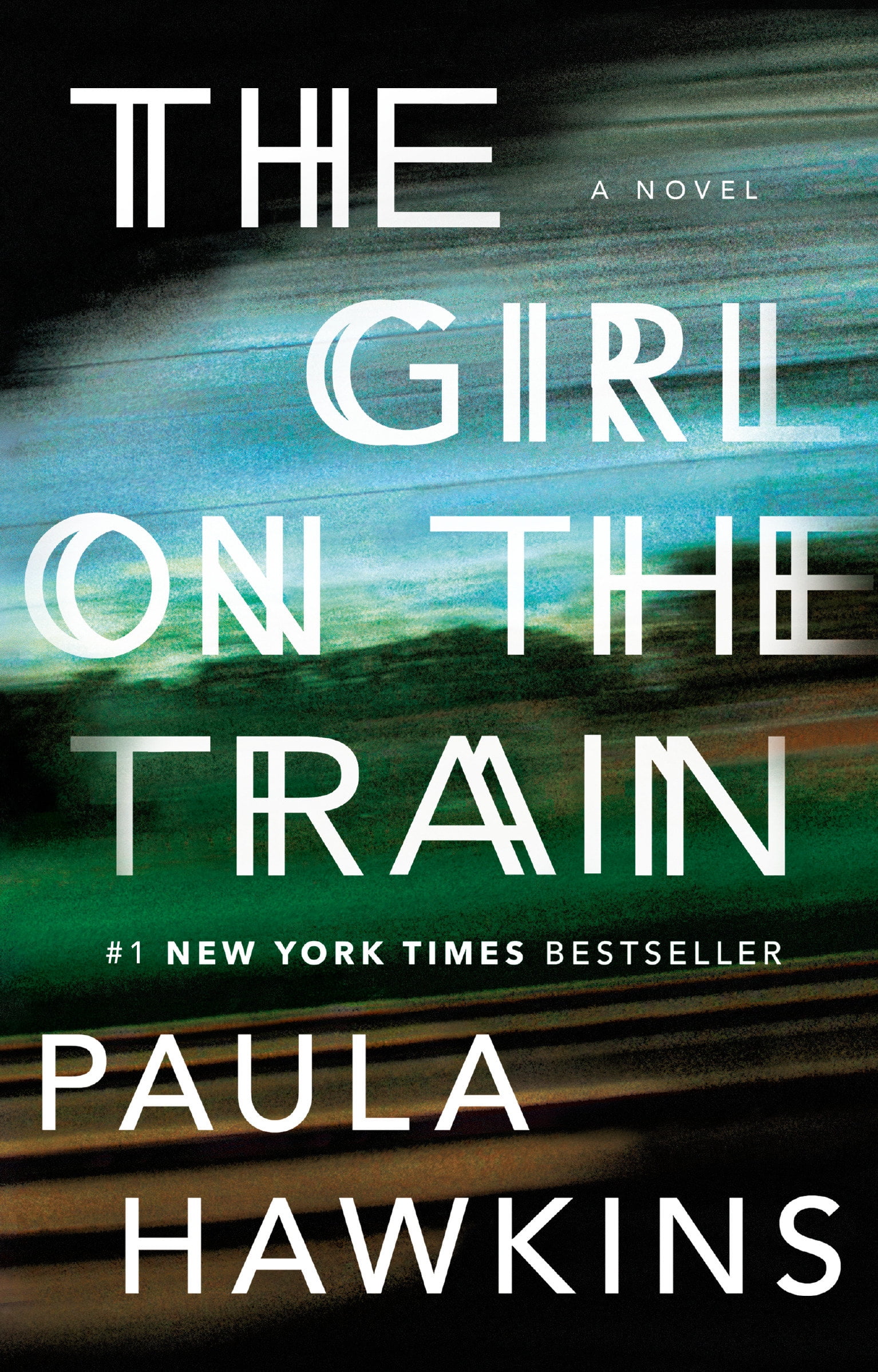
The Girl on the Train
Genres Thriller, Mystery, Drama
6/10
Rachel is a struggling alcoholic. Ever since her husband left her she’s been stuck in a never ending cycle of taking the train to and from London pretending to go to a job she’s lost months ago to not worry her flatmate. Purposeless, depressed and alone, Rachel only finds a few moments of joy each ride when the train passes a local neighbourhood where she sees “Jess” and “Jason” living a loving life. This all ends abruptly when “Jess” (whose real name is Megan) disappears. Rachel throws herself into helping “Jason” (whose real name is Scott) with finding her as despite being an unknown alcoholic loose cannon, Rachel might have just seen enough from her seat in the train to solve Megan’s disappearance.
Highlights
- It’s got an effective format and the reveal of the mystery is satisfying if a bit obvious
- The cover art belies a fast paced story which this isn’t
- Nobody’s particularly likeable
- Everyone’s particularly depressing
The Girl on the Train is, just like The Housemaid was, in that I’ve known about it for a while but some suspicious reviews had me putting off reading it for a long time. My conclusions are also quite similar although opposite in that I found The Housemaid overly quirky in its ending whereas The Girl on the Train‘s ending is overly depressing.
We mostly follow Rachel, a recently divorced alcoholic whose husband cheated on her, had a child and left her because she became an alcoholic after discovering that she could not have children. It’s already a depressing set up, Tom, Rachel’s ex is clearly an ass who justifies his own cheating by blaming Rachel for her alcoholism when he has shown no evidence of ever supporting her through the trauma of being unable to have biological children. He pretends that having a child wasn’t that important to him but he also never offered adoption as an alternative to Rachel. And therein lies the first problem of this book: everyone is an ass trying to justify their own shitty behaviour (and sometimes they’re just asses).
Tom’s new wife, Anna, is a hypocritical, superficial, cheating enthusiast who flirts with the idea of murder being the right outcome if it gets her her happy ending with Tom. She eventually comes around but then immediately still assists with another murder and completely gets away with it, in particular because “Riley”, a police woman has decided that she liked Anna and hated everyone else beyond reason and professionalism. Riley isn’t a given a justification for her behaviour, she’s just an unprofessional, creepily incompetent cop who would rather make fun of Rachel than take her story of assault seriously. Megan who’s meant to be the victim here is also a cheating enthusiast which she justifies unbearably by a “I can’t help who I am” and her husband Scott, who’s mostly decent ends up also being a violent husband who happily beats women up.
This leaves us with Rachel whose genuine pathos makes her at least sympathetic as her alcoholism is more than understandable. It becomes more frustrating when she supposedly tries to quit for the sake of helping Megan but then proceeds to lie and justify her way around to still drink despite countless offers for help.
Jumping to the end, no character has grown. Some have died which means they’re not being obnoxiously despicable and pathetic anymore, but that doesn’t count as growth. Rachel is still an alcoholic with even more trauma, Anna is still a superficial hypocrite, Scott is still a violent man, and Riley is still inexplicably a bitchy cop. In a lot of ways it reminded me of The Guest List which was also profoundly depressing with a miserable ending…and also British? It certainly refers to Sainsbury’s a lot and I find the overlap of The Guest List’s depressing writing with The Thursday’s Murder Club‘s repeated references to Sainsbury’s a surprising pattern to notice. Is modern British literature defined by Sainsbury’s and depression?
This depressing tone also affects the writing style which feels decisively slow, especially when compared to the cover art with its blurred speed lines from the train. Train that actually has very little to do with the actual mystery and drama. The only two events of relevance on said train are the event Rachel saw from the train (which turns out to be a false lead) and a red-haired man…red-haired…red-herred…red-herring… (This would be funny if it wasn’t literally the only attempt at witty humour of the book, this isn’t 22 Jump Street). It makes up for it by using a fairly interesting chapter structure alternating between the point of views of Rachel, Megan and Anna and splits the chapters up by date and time which gives it a very back to back to back chapter progression but it’s a faked pace, the actual plot progresses at a leisurely pace and not much actually happens in it either until the end reveal.
I’d argue The Girl on the Train was every so slightly better written than The Housemaid, but it’s a stretch, I think the dark, depressing tone happens to fake a more mature writing style than the author is really capable of (at least when compared to their characters mostly being one dimensional pricks). I didn’t hate my time with it but it definitely just wasn’t much fun, the resolution of the big mystery is fairly obvious from around 60% of the book and then that just left me hanging around until Rachel’s boozed out neurons put two and two together.