
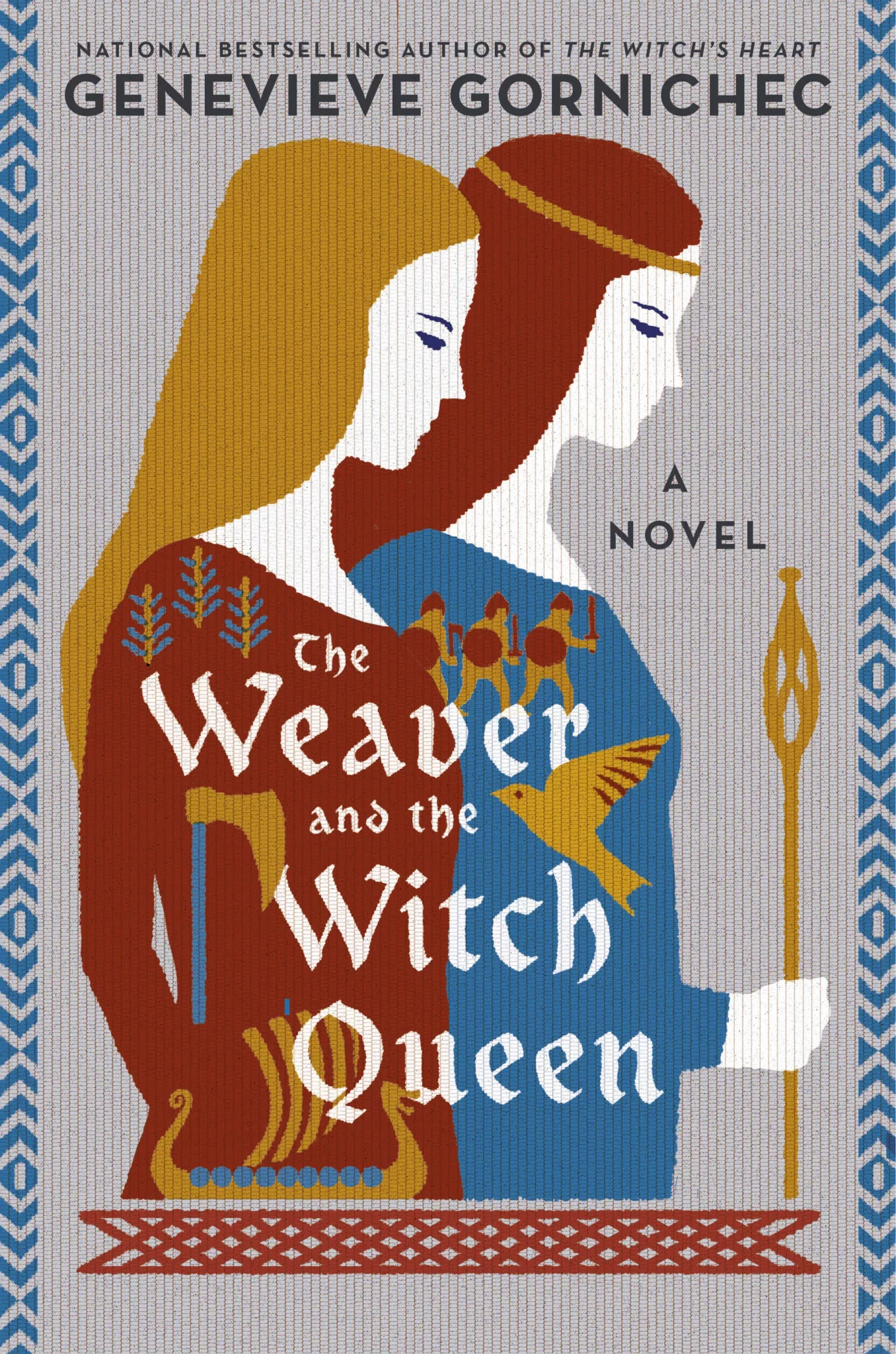
The Weaver and the Witch Queen
Genres Historical, Fantasy, Romance
7/10
Gunnhild, Oddny and Signy are long time childhood friends who are revealed to be bonded together by fate by the passing witch. Despite swearing themselves to each other, Gunnhild soon after leaves her family and friends to escape her cruel mother and become a witch. Years later, Signy and Oddny’s life takes a turn for the worse as their village is raided. Whilst Signy gets kidnapped, Oddny is saved by a metamorphosed Gunnhild. Together through the destined power of their bond and Gunnhild’s witchcraft, they will have to find a way to save Signy, but on their quest, they might just find that the stakes might be larger than anticipated.
Highlights
- The writing style is more approachable than The Witch’s Heart’s
- Some great characterisation
- The story is nuanced and does not shy away from darkness when needs be
- The ending is rushed and unsatisfying
I love Genevieve Gornichec’s previous book, The Witch’s Heart; it read a bit awkwardly at times but it had amazing characterisation and very naturally included themes of gender and sexuality without it feeling sanctimonious or forced. Add to that the viking mythological theme and my bread and butter genre of romantasy and it landed up there with some of my favourite books scoring a very strong 9/10. Needless to say, I’ve been excitedly waiting for The Weaver and the Witch Queen for over 2 years and my expectations were high. These expectations might have played a bit against it however as despite enjoying my time with the book and it’s definitely above the average good 7/10 book in some ways, it also had some shortcomings holding it down. A lot of The Witch’s Heart’s strengths are still here with amazing characterisation filled with nuance with a couple key exceptions. Specifically, one of the two main protagonists, Oddny comes off as a bit of a Mary Sue towards the end of the book and the big bad guy whose identity remains a mystery for most of the story has such an underwhelming reveal and is dispatched so quickly that I have already forgotten their name.
This is however not as big an issue as it might sound as the focus of the book isn’t what it claims to be. The beginning of the story will have you believe that the story is about Gunnhild and Oddny having to save their third blood sworn sister, Signy who got kidnapped by raiders. However, the majority of the book is spent waiting for the winter season to pass during which Gunnhild strengthens her witch powers and gets to grips with the idea of being a queen. Oddny spends most of her time…not doing much really. Both Gunnhild and Oddny have their respective romantic arcs which admittedly surprised me as I came in fully expecting a lesbian relationship between the two, but unlike Gunnhild, Oddny doesn’t have much else to characterise herself. She is the titular weaver of the book although it barely plays a role in the story and whilst chapters alternate telling the story from Gunnhild’s and Oddny’s perspective a key difference is that Gunnhild will be very focused on describing her actions and thoughts whilst Oddny will also focus on Gunnhild’s actions. Thus, her becoming instrumental in the final resolution of the story is even more jarring, especially when it breaks some of the established lore and unfairly devalorises one of Gunnhild’s secondary arcs.
Spoiler
One of Gunnhild’s storylines follows her journey through becoming a fully fledged witch. Having lost her mentor before completing her difficult training, she lacks in expertise and is plagued by self doubt, something that is key to her character development. However, in the last few chapters, Oddny swoops in and performs multiple complex spells, including one said to be impossible on her first try and she is the sole reason the book has a happy ending, dreadfully cheapening the outcome.
Thankfully the other characters more than make up for this as the author masterfully leverages the concept of “nobody believes they’re the bad guy” and makes you empathise to both good and bad guys by leveraging the viking culture.
Mild Spoiler
I met the Viking raiders attacking Oddny and Signy’s village as being the bad guys, however it is very quickly made evident that Oddny and Signy’s village is also filled with Vikings who could just have easily been the ones attacking, pillaging and enslaving another village.
This characterisation and nuance culminates during a dispute between four characters where all sides are equally right yet all but one must lose the argument, and as a reader, I honestly still do not know which side was really correct. This is not to say however that the author shies away from hard decisions in their writing, it’s something I was really worried about in the last few chapters as keeping all character actions morally neutral would have cemented the ending as an absolute car crash but when need be the author will include cold and hard realities whether it be the fate of those who end up as slaves or the one of the antagonists.
There is however one aspect that is treated with gloves and that’s the gender identity of a character who is a transgender man. To the benefit of the story, the inclusion of this character’s identity is once again quite natural. The words “transgender” or “gender identity” are never uttered as they would be severely out of place in a Viking setting. It is simply mentioned that the character was assigned the name of a woman at their birth but this is not what the name they use now, it’s a straighforward example of inclusion without being preachy, but it also slightly imbues the world with a bit of our modern views. The identity of the character is not accepted by their parents but every other character is fully supportive. I checked the author’s inspirations for this character, I had a quick read through gender roles in Viking society, and it definitely is less out of place here than it would have been in a medieval Europe setting. Nevertheless, it still feels too naturally transpositive a world, and I think having a little bit more resistance about this character’s gender would have strengthened both the believability and made the transpositive message more mature.
The maturity of the writing has a whole however seems to have slightly dropped compared to The Witch’s Heart. Gone are the poetic turns of phrases or the slightly mythical vibe of the text replaced a more straightforward and casual way of writing. It’s not unpleasant, or unfitting; The Witch’s Heart was a hard Viking mythology story whereas The Weaver and the Witch Queen is a story of people’s lives and ultimately this writing style makes the book read very easily and smoothly. The one noted exception is that certain dialogues, particularly arguments feel a bit too childish, having an aura of “and everyone clapped”.
So, The Weaver and the Witch is not going to be a forever remembered gem but that’s fine. It’s a competent and entertaining romance with amazing characters and a strong Viking atmosphere. It fumbles at the end leaving me with a sour note but the adventure it takes you on is well worth the time.